Technology will not replace Great Teachers but technology in the hands of Great Teachers can be Transformational

Monday, 15 October 2018

Future of 3D Hologram

Cell phone based enlarged reality (AR) and the AR headset blast will bring 3D images into our lives all over the place. In the meantime, however, the genuine AR multi-dimensional image upheaval is being overlooked.
A multi-dimensional image is a 3D virtual protest that isn't really "there," yet looks as though it were, either skimming noticeable all around or remaining on a close-by work area or table.
3D Hologram
The "holo" in Microsoft's HoloLens headset is a reference to 3D images. Furthermore, when we think about these future AR 3D images, we consider headsets, goggles, for example, HoloLens or cell phones running applications made with Apple's ARKit or Google's ARCore.
The innovation is progressively getting to be pervasive, and organizations are hustling to win advertise control. A contender to the HoloLens, the "Lightware" headset from shrouded Magic Leap, has been in the news of late, following six years of improvement at an expense of $2 billion, for two reasons.
The first is that the organization divulged the "Maker Edition" of the headset in December. Presently we realize what it would appear that: something ideal off the front of a vintage science fiction novel.

The second reason is wild hypothesis that Apple may purchase Magic Leap to quicken its very own AR goggle advancement, theory driven by Apple expert Gene Munster.

Sunday, 14 October 2018

Bio-Computers

"Personal Computer" usually refers to an electronic gadget that computes a great deal of intricate data, yet it merits recollecting that the historical background of the word comes from the mid-seventeenth century. Initially, it basically signified "one who computes", with no gadgets required.
This piece of history loans itself perfectly to a look into the eventual fate of processing. As first spotted by New Scientist, a group from ETH Zurich and the University of Basel are making types of progress on developing biocomputers – those produced using living cells – and another paper, in Nature Methods, showcases their most exceptional framework to date.
Utilizing nine diverse cell populaces collected into 3D societies, the group of manufactured scholars has figured out how to motivate them to carry on like an exceptionally straightforward electronic computational circuit.
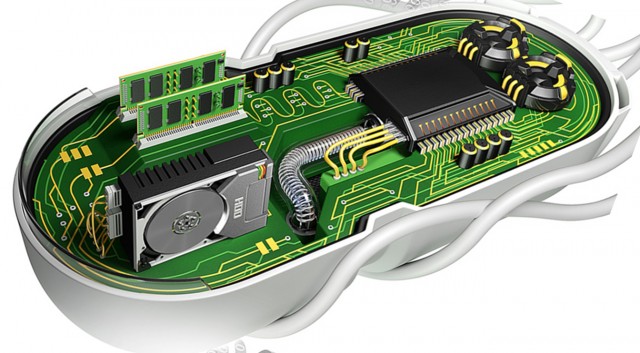
Bio-Computer TechTake out the electrical wiring and flagging, and supplant them with compound information sources, and you have a living PC that reacts to approaching information and can process it utilizing simple rationale doors AND gates, NOT gates, and OR gates.

Every advanced framework depend on rationale doors. Through a NOT entryway, for instance, a parallel contribution of 1 turns into a 0 at the yield. This is all, exceptionally essential stuff, yet the way that a group has figured out how to get a natural PC to do this is a momentous accomplishment.

To the extent they know, this accomplishment is remarkable. There are a few past models of biocomputer wizardry, yet they're unquestionably essential: From utilizing DNA to make working transistors to utilizing jellyfish matter to make a bio-pixel show, these are as yet great, yet no place close as cutting edge as this present group's rationale entryway work.


It's justifiable if this all sounds a bit of shaking, however recall, a PC is simply something that handles information. Our brains, significantly more mind boggling than (and apparently unique to) PCs, handle information constantly; we get tactile improvements, our neurons procedure it, and we respond as needs be. Is it extremely so astonishing that a bunch of cells can go about as a crude PC?

Wednesday, 10 October 2018

3D-Printing

More commonly known as for what is actually alluded to as Additive Manufacturing, or AM, Most physical parts are made using 3D technology (fabricated) by throwing or forming material into a shape you need, expelling material from stock to get the shapes you need, as well as consolidating physical parts you get by the other two strategies. Rather than these well-demonstrated techniques, AM makes a section by working up material layer by layer at any given moment. That is the reason it is called additive manufacturing – it adds layers of material to get a shape.
The upside of this methodology is that you simply require one machine to make a section, you can go straight from a PC model to that part, and you are not kept down by the physical imperatives of conventional procedures. These highlights enable anybody to make a section and to make shapes we just couldn't make previously. At first, we just utilized it for models before parts were made. At that point we began to make devices to make last items, and now 3D Printing is utilized to assembling end-utilize parts.

3D PrintingSending a PC model to a 3D Printer is only one of numerous means engaged with Additive Manufacturing. At the point when the administration is utilized accurately, it incorporates distinguishing the correct kind of added substance assembling to utilize, setting up the geometry, setting parameters on the machine, printing the parts, expelling bolsters, cleaning the parts, sanding, applying a surface complete treatment, and afterward review and transporting. Anybody can send a section to a printer; alternate advances are what have the effect between essentially printing a section, and delivering an incredible part.

Cloud Computing

There was a time when companies use to keep actual file to safeguard their documents for recordkeeping and it was hectic and space consuming...